Designer Handbag Resale Value and Investment Guide
Not all luxury handbags are created equal when it comes to resale value. A $1,000+ Gucci bag might retain 70% of its retail price after two years, while a $300-$500 bag from an accessible luxury brand might retain only 30%. Understanding which brands, styles, and conditions command the strongest resale prices turns a purchase into a smarter investment.
The pre-owned luxury market has exploded in recent years, driven by platforms like The RealReal, Vestiaire Collective, and Rebag. This growth has made "investment value" a legitimate buying criterion — not just for ultra-luxury Hermès and Chanel pieces, but for the mid-range and accessible luxury bags we review on this site. Even if you never plan to sell your bag, understanding resale dynamics tells you something important: which brands and styles the market values most, and why.
This guide covers the brand hierarchy for resale value, analyzes every bag in our catalog for resale potential, explains the condition factors that drive pricing, and provides practical advice for maximizing your return when it's time to sell.
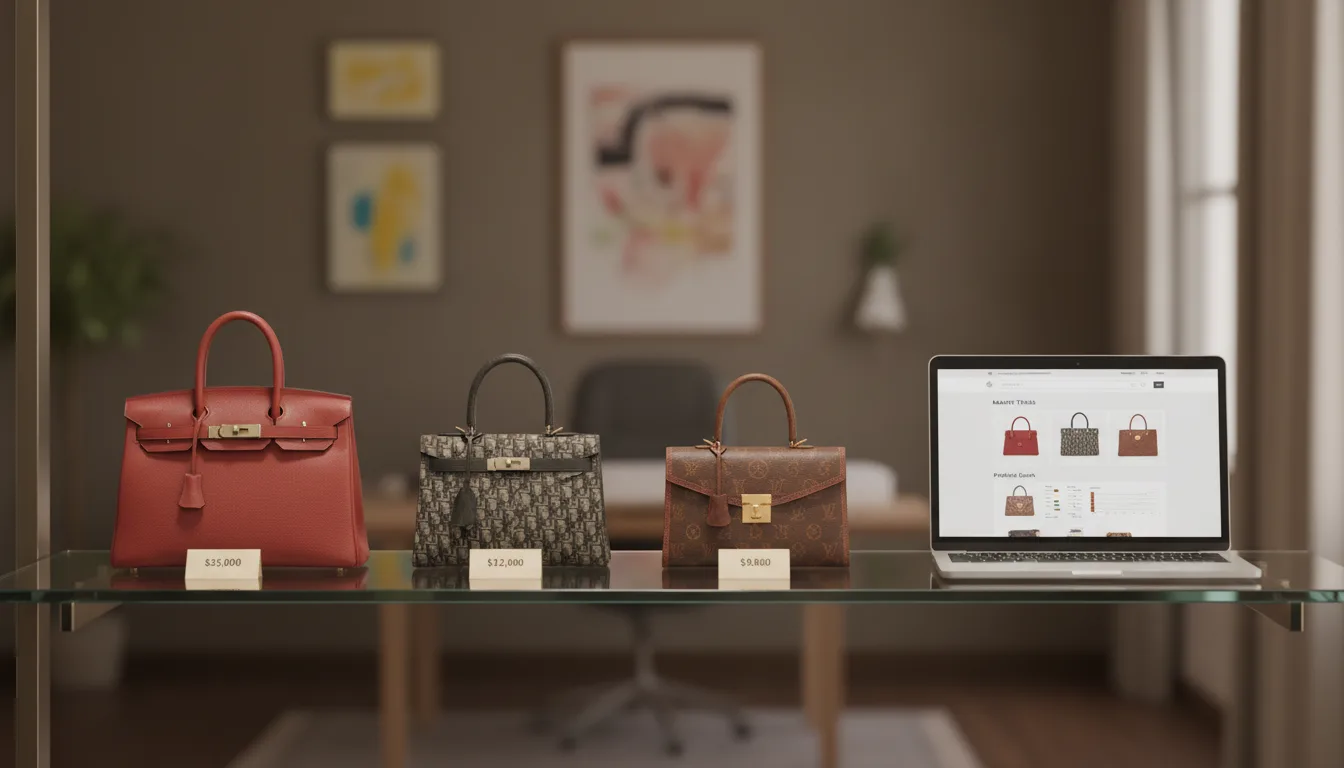
The Brand Hierarchy for Resale Value
Brand prestige is the single largest factor in resale value — more than condition, age, or style. The market consistently pays premiums for certain brand names based on heritage, scarcity, and perceived exclusivity. Here is how the major brands rank, from strongest to weakest resale performance:
Tier 1: Ultra-Premium (70-120%+ Resale)
Hermès, Chanel, Louis Vuitton (classic lines)
Hermès Birkins and Kellys routinely sell above retail — they are the only handbags that consistently appreciate in value. Chanel Classic Flaps have more than tripled in retail price since 2010, pushing pre-owned prices upward alongside them. Louis Vuitton's monogram canvas pieces — particularly the Neverfull, Speedy, and Pochette — hold 60-80% of retail value in good condition and can exceed retail for discontinued styles.
The Louis Vuitton Pochette Accessoires (in the $500–$1,000 range) in our catalog sits in this tier. LV monogram canvas has the strongest resale curve of any material we review — the combination of iconic pattern recognition, durable coated canvas construction, and Louis Vuitton's aggressive retail price increases means pre-owned Pochettes frequently sell for 70-85% of current retail. Discontinued color variants and limited editions can exceed retail.
Tier 2: High Resale (50-75% Retention)
Gucci, Prada, FENDI, Versace, Ferragamo
Italian luxury houses command strong resale values, driven by their heritage, Made in Italy craftsmanship, and global brand recognition. Within this tier, specific styles matter significantly:
- Gucci: The Gucci Soho Flap ($1,000–$1,500) and Gucci Interlocking GG Chain ($1,000–$1,500) represent two of Gucci's most recognizable silhouettes. Soho bags with the embossed GG logo hold value particularly well because the design has been consistent for years — buyers know exactly what they're getting. The Gucci GG Canvas Belt Bag ($500–$1,000) benefits from the enduring popularity of the GG monogram pattern. Expect 55-70% retention on these styles in excellent condition.
- Prada: Saffiano leather bags like the Prada Esplanade ($1,500–$2,500) have the strongest resale in Prada's lineup because saffiano ages exceptionally well — a 5-year-old saffiano bag can look nearly new, which maintains its resale value. The Vitello Phenix Tote ($1,500–$2,500) and Tessuto Nylon Tote ($1,000–$1,500) hold 50-65% in good condition.
- FENDI: The FF Cashmere Shopper ($2,500+) is a unique case — its cashmere construction makes it rare and desirable on the secondary market, but condition sensitivity (cashmere degrades with heavy use) means value drops steeply below "excellent" condition. The Fendigraphy Leopard ($2,500+) is a statement piece with collector appeal but limited daily-use versatility, which narrows the resale audience.
- Versace: The Versace Medusa Clutch ($1,000–$1,500) carries strong brand recognition and the iconic Medusa hardware, giving it solid resale at 50-60% in excellent condition.
- Ferragamo: The Ferragamo Studio Box ($1,500–$2,500) benefits from quiet luxury demand — understated bags from heritage brands are increasingly sought on resale platforms. Expect 50-65% retention.
When a luxury brand discontinues a popular style, resale prices often spike 20-30% within the first year as remaining supply meets ongoing demand. If you own a bag and hear it's being discontinued, that may be the ideal time to sell — or to hold, depending on how iconic the design is. The Gucci Soho line, for example, gained collector status after being retired from mainline production.
Tier 3: Moderate Resale (35-55% Retention)
Coach (premium lines), Tory Burch, Marc Jacobs
These brands occupy the space between luxury and accessible — they offer genuine quality and design at prices below the Italian houses, but the resale market doesn't assign them the same premium.
- Coach: The Coach Tabby 26 ($300–$500) is the strongest resale performer in Coach's current lineup. The Tabby line repositioned Coach as a fashion-forward brand, and the sculptural C closure has genuine design cachet. Expect 35-50% retention for Tabby bags in excellent condition. Older Coach styles (outlet lines, non-Tabby) perform significantly worse — often below 25%.
- Marc Jacobs: The Marc Jacobs Belted Suede ($300–$500) has moderate resale appeal as a design-forward piece, but suede condition sensitivity impacts resale pricing. Well-maintained suede commands higher returns than average. Expect 35-45%.
- Tory Burch: The Tory Burch Ella Crochet Tote ($300–$500) is seasonal and material-specific, which limits its resale audience. Crochet bags have a niche collector following but aren't broadly demanded. Expect 30-40%.
Tier 4: Low Resale (20-35% Retention)
Michael Kors, Kate Spade, Brahmin, Dooney & Bourke, Frye
Accessible luxury brands have the weakest resale performance because the secondary market price approaches the retail price of new bags in the same tier. A buyer considering a pre-owned Kate Spade bag under $200 is also considering a new Dooney & Bourke bag under $300 — the "used" stigma hits harder at lower price points.
- Michael Kors: The Michael Kors Kensington ($300–$500) has limited resale value — MK's frequent outlet sales and promotions depress secondary market pricing. Expect 20-30%.
- Kate Spade: The Kate Spade Knott Hobo ($300–$500) holds slightly better than average for the tier because the Knott line is a fashion-forward design. Expect 25-35%.
- Brahmin: The Brahmin Duxbury Satchel ($300–$500) has a dedicated cult following, but Brahmin's lower brand awareness limits the resale audience. Buyers who know Brahmin appreciate the quality — those who don't may undervalue it. Expect 25-35%.
- Dooney & Bourke: The Dooney & Bourke Gretta Satchel (Under $300) has the lowest resale in our catalog at 20-30%. The coated canvas material and entry-level positioning make it difficult to command premiums secondhand.
- Frye: The Frye Melissa Shopper (Under $300) is an interesting case — the Italian pull-up leather ages beautifully, which can actually increase appeal for pre-owned buyers who prefer a broken-in patina. Expect 25-35%, but bags with rich patina may outperform.
The value equation: Low resale percentage doesn't mean low value. The Frye Melissa Shopper retains 25-35% of its under-$300 retail price. The Prada Esplanade retains 55-70% of its $1,500-$2,500 retail price — recovering significantly more in absolute dollars. But when you calculate cost per wear, accessible luxury bags can offer lower total cost of ownership even with worse resale percentages. Accessible luxury bags can offer lower total cost of ownership even with worse resale percentages.
What Drives Resale Value: The Five Factors
Beyond brand, five specific factors determine where a bag falls within its tier's resale range. Understanding these factors helps you both choose bags that hold value and maximize your return at sale time.
1. Condition
Condition is the variable you have the most control over, and it creates the widest price spread within any given brand tier. Resale platforms use standardized condition grades:
- New/Never Used (NWT): Tags still attached, no signs of use. Commands 80-95% of retail for premium brands.
- Excellent: Minimal signs of use — no scratches, clean interior, shiny hardware, intact stitching. Commands 65-80% of retail.
- Very Good: Light signs of use — minor surface wear, slight hardware dulling, clean interior. Commands 50-65%.
- Good: Visible wear — scratches, corner wear, minor stains, hardware patina. Commands 35-50%.
- Fair: Significant wear — deep scratches, interior stains, hardware damage, structural softening. Commands 20-35%.
The gap between "excellent" and "good" condition can represent 20-30% of the bag's retail value — on a $1,500+ bag, that can mean hundreds of dollars. Proper care (see our care guide) directly translates to preserved dollars.
2. Completeness
Having the original dust bag, box, authenticity card, receipt, and care booklet increases resale value by 10-20%. The most impactful items:
- Dust bag: +5-8% — serves as an authenticity indicator and shows the buyer the bag was properly stored
- Authenticity card/receipt: +5-10% — provides provenance documentation, especially critical for FENDI, Prada, and Ferragamo bags
- Original box: +3-5% — indicates the bag was stored correctly and adds perceived value
- Care booklet and extras: +2-3% — completes the "full set" that collectors and premium buyers seek
Always keep your purchase receipt — not just for returns, but for resale. A receipt from an authorized retailer (Amazon, department store, brand boutique) is the strongest possible proof of authenticity. Store it separately from the bag (a digital photo in your email is a good backup). For bags purchased through Amazon, your order confirmation email serves the same purpose — save it permanently.
3. Style Classification: Classic vs. Trend
Classic styles with decades of continuous production hold value far better than trendy designs that peak and decline within a few seasons.
Classics (strong resale longevity):
- Louis Vuitton Pochette Accessoires — The monogram canvas pochette has been in production for decades. Timeless design means consistent demand.
- Gucci Soho Flap — The embossed GG logo and chain strap are classic Gucci elements that transcend seasons.
- Prada Esplanade — The saffiano top-handle is an archetype. Structured, professional, endlessly relevant.
- Ferragamo Studio Box — The Gancini lock dates to 1969. Quiet luxury with half a century of heritage.
Trends (resale value declines faster):
- Bold colors and seasonal palettes — the vivid pink of the Coach Tabby is striking but limits outfit pairing, narrowing the resale audience
- Statement materials — the leopard fur on the FENDI Fendigraphy is fashion-forward but polarizing; crochet on the Tory Burch Ella is seasonal
- Belt bags and novelty silhouettes — the Gucci GG Belt Bag relies on the belt-bag trend remaining in style
This doesn't mean trendy bags are bad investments — it means your selling window is shorter. If you plan to resell a trendy bag, sell within 1-2 years while the trend is still current.
4. Color
Neutral colors (black, brown, beige, navy) consistently outperform bold colors on resale because they appeal to the widest audience. Specific color dynamics:
- Black: The strongest resale color across all brands. Black bags hold 5-10% more value than their colored counterparts.
- Brown/Cognac: Strong year-round demand, especially for leather bags. The cognac Frye Melissa benefits from this.
- Beige/Neutral: Strong demand but condition-sensitive — light colors show wear more visibly, which can lower the condition grade. The beige Ferragamo Studio Box needs impeccable care to command premium resale.
- Monogram/Signature patterns: Very strong. The LV monogram and Gucci GG canvas are instantly recognizable, which drives demand.
- Bold colors (pink, red): Smaller resale audience. The red Prada Vitello Phenix and pink MK Kensington will have fewer potential buyers than their black equivalents.
5. Market Timing
The luxury resale market has seasonal patterns and market cycles that affect pricing:
- Best time to sell: January-March (New Year's resolutions to buy luxury) and September-November (holiday gift shopping season)
- Worst time to sell: July-August (summer vacations reduce online shopping) and immediately after major brand sales events
- After discontinuation: When a brand retires a style, resale prices often spike. Monitor brand announcements for your bags.
- After price increases: When brands raise retail prices (Gucci, Prada, and Louis Vuitton do this annually), pre-owned prices for existing inventory rise in tandem.
Resale Value by Bag in Our Catalog
Here is a practical resale projection for every bag we review, assuming excellent condition and complete packaging:
Strongest Resale Performers
- LV Pochette Accessoires — Retail: $500–$1,000 | Expected resale: 70-85% | Why: Iconic monogram, compact size in high demand, LV price increases push secondhand prices up
- Prada Esplanade — Retail: $1,500–$2,500 | Expected resale: 55-70% | Why: Saffiano leather ages perfectly, classic top-handle shape, Prada heritage
- Gucci Soho Flap — Retail: $1,000–$1,500 | Expected resale: 60-75% | Why: Iconic embossed GG, versatile chain strap, classic Gucci silhouette
- Gucci Interlocking GG — Retail: $1,000–$1,500 | Expected resale: 60-75% | Why: Bold GG turnlock, heavy chain hardware, unmistakable Gucci identity
Solid Resale Performers
- FENDI Cashmere Shopper — Retail: $2,500+ | Expected resale: 50-65% | Why: Unique material, collector appeal — but condition-sensitive cashmere limits upper range
- FENDI Fendigraphy Leopard — Retail: $2,500+ | Expected resale: 50-65% | Why: Statement piece with collector demand — niche audience limits breadth
- Versace Medusa Clutch — Retail: $1,000–$1,500 | Expected resale: 50-65% | Why: Iconic Medusa hardware, Made in Italy, strong Versace brand recognition
- Ferragamo Studio Box — Retail: $1,500–$2,500 | Expected resale: 50-65% | Why: Gancini heritage, quiet luxury trend, strong Italian craftsmanship reputation
- Prada Vitello Phenix Tote — Retail: $1,500–$2,500 | Expected resale: 50-65% | Why: Prada brand, durable leather — red color slightly limits audience
- Prada Tessuto Nylon Tote — Retail: $1,000–$1,500 | Expected resale: 50-65% | Why: Iconic Prada nylon, practical design, lightweight appeal
- Gucci GG Canvas Belt Bag — Retail: $500–$1,000 | Expected resale: 50-65% | Why: Heritage GG canvas, but belt-bag silhouette is trend-dependent
Moderate Resale Performers
- Coach Tabby 26 — Retail: $300–$500 | Expected resale: 35-50% | Why: Strong design, but Coach brand equity gaps European houses on resale
- Marc Jacobs Belted Suede — Retail: $300–$500 | Expected resale: 35-45% | Why: Design appeal, but suede condition sensitivity limits upper range
- Tory Burch Ella Crochet — Retail: $300–$500 | Expected resale: 30-40% | Why: Seasonal crochet, niche material — limited year-round demand
Lower Resale (But Strong Value Bags)
- Kate Spade Knott Hobo — Retail: $300–$500 | Expected resale: 25-35%
- Brahmin Duxbury Satchel — Retail: $300–$500 | Expected resale: 25-35%
- MK Kensington — Retail: $300–$500 | Expected resale: 20-30%
- Frye Melissa Shopper — Retail: Under $300 | Expected resale: 25-35%
- Dooney & Bourke Gretta — Retail: Under $300 | Expected resale: 20-30%
The "cost per wear" perspective: Instead of focusing solely on resale percentage, think about cost per wear. A $1,000+ Gucci Soho Flap that you carry 300 times over 3 years and resell at 65-75% costs roughly $1-2 per wear. An under-$300 Dooney & Bourke Gretta that you carry 200 times and resell at 20-30% costs under $1 per wear. Both are exceptional value — the Gucci just has a higher total outlay with stronger absolute dollar recovery.
Where to Sell: Platform Comparison
Choosing the right platform can mean a 10-20% difference in your final payout. Here is how the major resale platforms compare:
The RealReal
- Best for: Bags over $500, Italian luxury brands, sellers who want hands-off service
- Commission: 30-40% (decreasing with higher sales volume)
- Pros: Professional photography, authentication team, massive buyer audience, handles all shipping and customer service
- Cons: Highest commission rates, you lose control over pricing, authentication can take 1-2 weeks
Vestiaire Collective
- Best for: European luxury brands, sellers who want pricing control, international buyers
- Commission: 15-25% (varies by item price)
- Pros: Lower commission, global audience (especially strong in Europe), seller sets the price, platform authentication at point of sale
- Cons: You handle photography and listing, longer selling times for lower-tier brands, authentication adds days to the transaction
Rebag
- Best for: High-value bags ($500+), sellers who want immediate payment, guaranteed quotes
- Commission: Buys outright at 40-60% of resale value
- Pros: Instant payment (no waiting for a buyer), quote provided before you ship, strong for premium brands
- Cons: Lowest payout (they buy at wholesale, sell at retail), primarily focused on high-value luxury, may reject accessible luxury brands
Poshmark / eBay
- Best for: Bags under $500, accessible luxury brands, sellers experienced with online selling
- Commission: Poshmark: 20% flat; eBay: 8-13% plus payment processing
- Pros: Lower commissions, large audiences, you control everything
- Cons: No professional authentication (higher buyer skepticism), more scams and returns, you handle shipping and customer service
Maximizing Your Resale Return: 10 Practical Tips
- Keep everything. Dust bag, box, authenticity card, receipt, care booklet. Store them together in a safe place. This alone can add 10-20% to your resale price.
- Photograph upon purchase. Take detailed photos of your new bag — hardware, stitching, serial numbers, tags. These document the original condition and support authenticity claims at resale.
- Follow the care guide. Condition regularly, store properly, protect from water and stains. See our full care guide for material-specific instructions.
- Choose classic colors. If resale is a priority, black, brown, and neutral bags outperform bold colors by 5-10%.
- Buy classic styles. Bags with multi-decade production histories (LV Pochette, Gucci Soho) hold value longer than trendy silhouettes.
- Sell within 1-2 years if the bag is trend-dependent, or hold 10+ years for vintage collector value. Avoid the 3-7 year dead zone.
- Time your sale. List in January-March or September-November for maximum buyer activity.
- Choose the right platform. The RealReal for high-value luxury, Vestiaire for pricing control, Rebag for speed, Poshmark for accessible luxury.
- Price competitively. Research current listings for your exact bag model, color, and condition. Price 5-10% below the lowest comparable listing for a faster sale.
- Invest in presentation. Clean the bag professionally before listing. Good lighting in photos. Honest, detailed description of condition. First impressions drive resale prices.
If you view luxury bags as a collection, consider a "one in, one out" rotation strategy. When you buy a new bag, sell one from your collection. This keeps your collection fresh, funds new purchases, and ensures you sell bags while they're still in excellent condition — before years of storage diminish their value. The proceeds from selling a well-maintained Gucci bag can fund half the cost of the next purchase.
Frequently Asked Questions
Which luxury handbag brands hold their value the best?
Hermès holds the top position, with Birkins and Kellys frequently selling above retail on the secondary market. Louis Vuitton, Chanel, and Gucci follow as consistently strong performers, retaining 60-80% of retail value in good condition. Among the brands we review, Louis Vuitton monogram pieces (like the Pochette Accessoires), Gucci leather goods, and Prada saffiano bags have the strongest resale performance. Accessible luxury brands (Coach, Kate Spade, Michael Kors) typically retain 20-40% of retail value.
How much does condition affect resale value?
Condition is the single biggest variable in resale value. A bag in "excellent" condition (minimal signs of use, clean interior, shiny hardware) can command 70-80% of retail. The same bag in "good" condition (visible wear, minor scratches) drops to 50-60%. A bag in "fair" condition (significant wear, stains, hardware damage) may only bring 30-40%. Keeping your bag in excellent condition through proper care and storage can mean a difference of hundreds or even thousands of dollars at resale.
Are limited edition designer bags worth more on resale?
Often, yes — but not always. Limited edition bags from prestige brands (Louis Vuitton collaborations, FENDI special editions, Gucci artist collabs) frequently appreciate above retail due to scarcity. However, limited edition bags from accessible luxury brands rarely command premiums on resale. The key factors are brand prestige, how limited the run actually was, and cultural significance. A "limited edition" that was produced in 50,000 units is not truly scarce.
Where is the best place to sell a luxury handbag?
The three leading platforms are The RealReal (highest visibility, handles authentication and photography, takes 30-40% commission), Vestiaire Collective (global audience, peer-to-peer with platform authentication, 15-25% commission), and Rebag (fast payment, strong for high-value bags, offers instant purchase quotes). For bags under $500, Poshmark and eBay can also work but lack professional authentication. Choose based on your priority: maximum price (Vestiaire), fastest sale (Rebag), or least effort (The RealReal).
Does the original dust bag and box increase resale value?
Yes, significantly. Complete packaging — dust bag, box, authenticity card, receipt, care booklet — can increase resale value by 10-20% compared to the bag alone. The dust bag is the most impactful single accessory because it serves as an authenticity indicator and shows the buyer that the bag was properly stored. Authenticity cards and receipts are the second most valuable items, especially for brands like Prada and FENDI that use them as primary authentication documents.
Should I buy a designer bag as a financial investment?
A luxury handbag should be a fashion investment first and a financial investment second. While certain bags (Hermès Birkins, discontinued Louis Vuitton pieces, rare FENDI collaborations) have genuinely appreciated in value, the majority of designer bags depreciate. The smart approach is to buy a bag you love and will use, choose a brand and style with strong resale history, and treat resale value as a bonus — not a guaranteed return. If you want pure financial returns, there are more reliable investment vehicles.
How long should I keep a designer bag before selling it?
For maximum resale value, either sell within 1-2 years of purchase (while the bag is still current and in near-new condition) or hold for 10+ years until it becomes a "vintage" collectible. The worst time to sell is 3-7 years after purchase — the bag is no longer current but not yet vintage, putting it in a resale dead zone. Exception: discontinued styles can be sold immediately after discontinuation, as scarcity drives up prices.